


How to Know When You Need a Garbage Disposal Replacement in Fort Smith
Most Fort Smith homeowners think garbage disposals just work until they don't. Flip the switch, grind some scraps, move on. But these units leave clues long before they quit entirely — and if you're not paying attention, you're setting yourself up for a flooded cabinet or a backed-up sink at the worst possible time. Disposals don't announce their retirement. They just get louder, slower, and less reliable until something finally gives.
So here's what matters. If your unit is struggling to keep up, that's not bad luck. It's wear. Every jam, every reset, every weird smell is your disposal telling you it's running on borrowed time. And the longer you wait, the messier the failure gets — not just for your sink, but for your plumbing too.
When Clogs Become the Norm
An occasional jam happens. You drop something you shouldn't have, the blades catch, you hit reset and keep going. That's normal. But when clogs start showing up weekly — or daily — you're not dealing with user error anymore. You're dealing with a unit that can't process what it used to.
Dull blades and weak motors don't recover. They just get worse. If you're constantly fishing out debris or running the wrench under the sink to free things up, the disposal isn't doing its job. And no amount of ice cubes or citrus peels is going to fix that. At that point, replacement isn't optional — it's overdue.
The Sounds That Mean Trouble
You know what your disposal sounds like when it's working. A steady hum, maybe some grinding as it chews through waste. But when you start hearing metal scraping metal, rattling, or a high-pitched whine that wasn't there before, something inside has shifted or broken.
Sometimes it's a fork that slipped past you. Other times, it's a bearing that's shot or a blade mount that's come loose. Either way, if the noise doesn't stop after you've cleared the chamber, the unit's integrity is compromised. And once internal components start failing, repairs rarely hold. You're better off replacing it before it locks up completely or damages your plumbing.
Smells That Won't Go Away
A garbage disposal that's functioning properly shouldn't stink. Sure, food goes down there — but it should also get flushed out. When odors linger even after you've scrubbed, deodorized, and run hot water for minutes, it means waste is sitting somewhere it shouldn't be.
That could be trapped particles in crevices the blades can't reach anymore. Or it could mean the grinding chamber isn't clearing efficiently, leaving residue to rot. Either way, persistent smell is a red flag. It's not just unpleasant — it's unsanitary. And if cleaning doesn't solve it, the disposal has lost the ability to do what it was built for.
Leaks Don't Fix Themselves
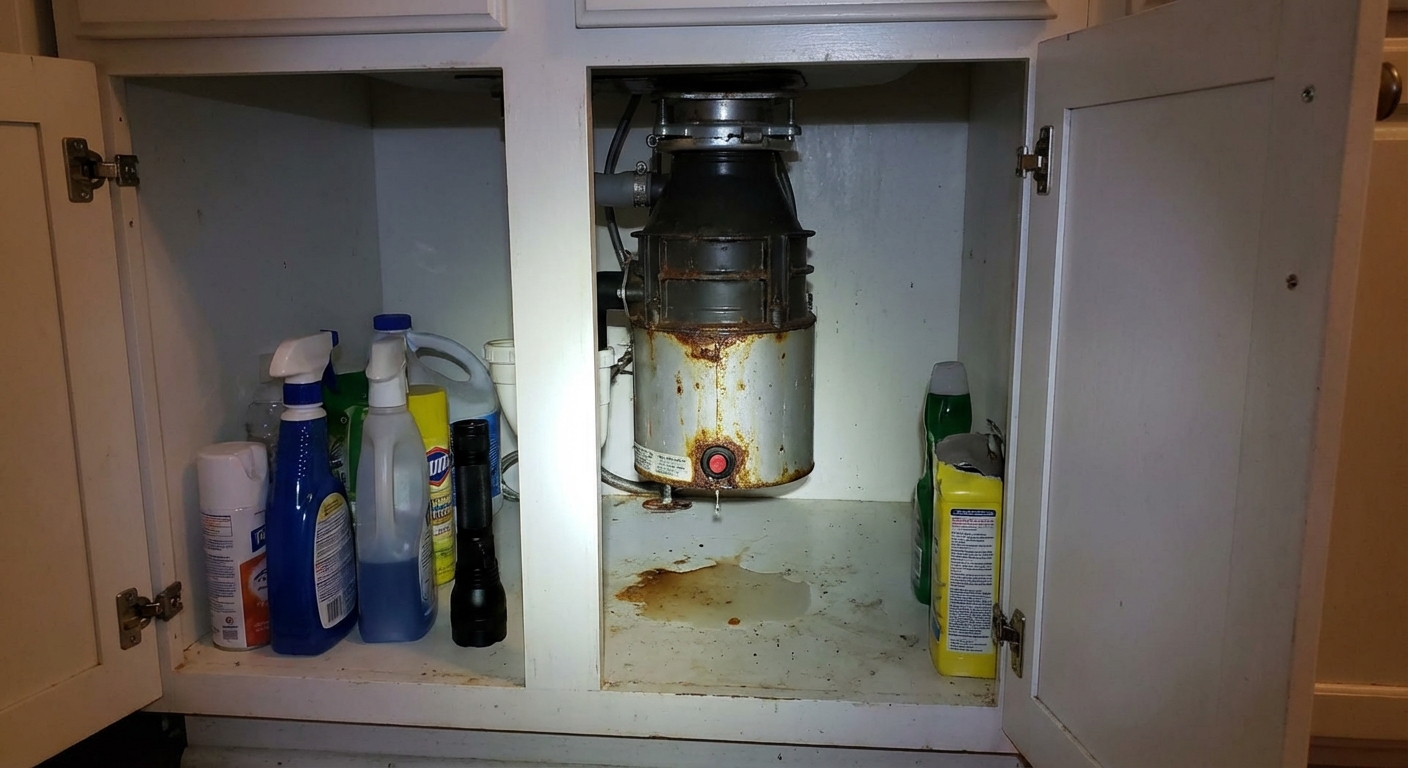
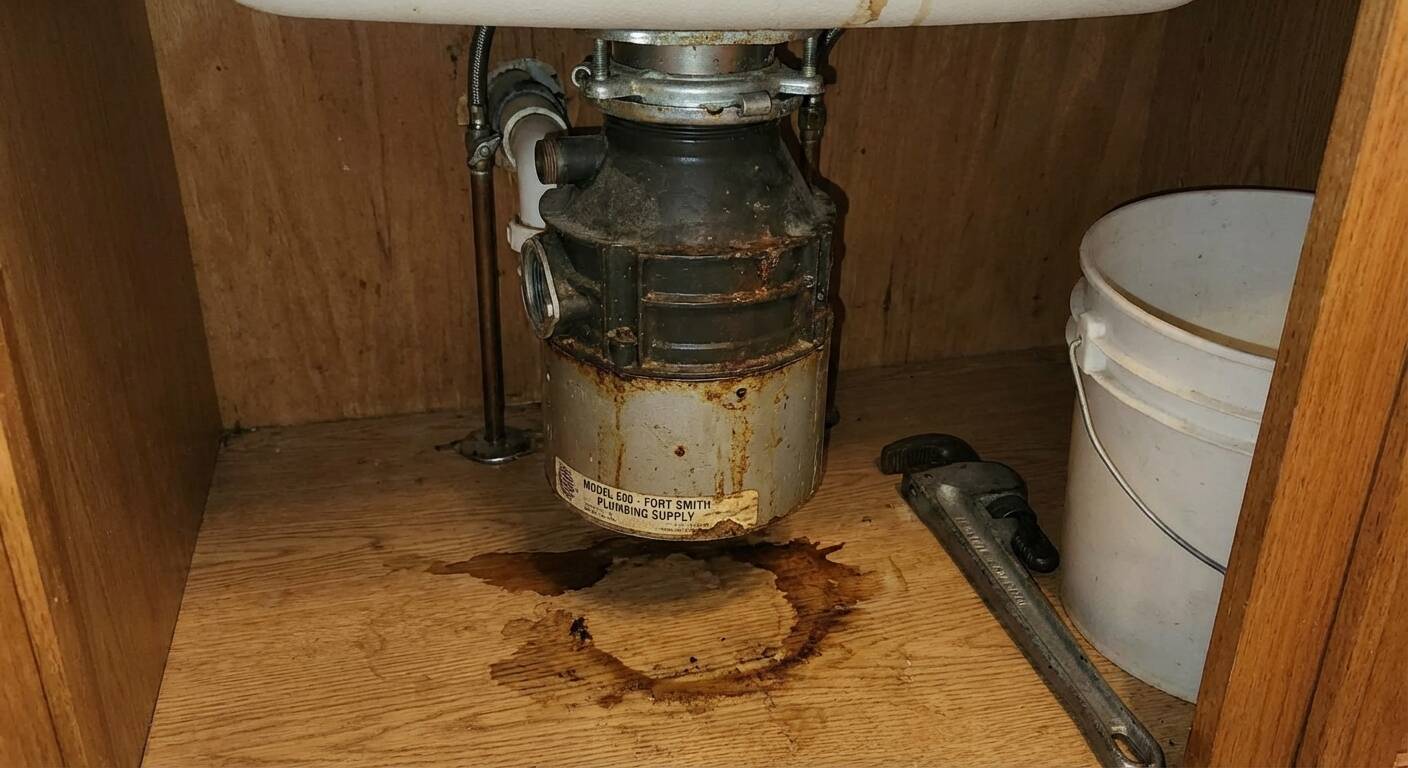
Water under your sink is never a good sign. If you spot pooling or notice your cabinet floor is damp, check the disposal first. Leaks can come from loose connections at the drain or dishwasher inlet — those are fixable. But if the leak is coming from the body of the unit itself, you've got a crack or a seal failure.
Once the housing starts leaking, there's no patching it. The unit is done. And the longer you let it drip, the more damage you're doing to your cabinetry, flooring, and potentially the subfloor. Catch it early, replace it fast, and you'll save yourself a much bigger repair bill down the line. If you're dealing with persistent leaks or other plumbing issues, professional leak and pipe repair can help prevent further damage.
Performance That's Gone Downhill
If your disposal used to chew through scraps in seconds and now it takes forever — or worse, leaves chunks behind — the motor's losing power. Blades dull over time, and motors wear out. There's no bringing that efficiency back.
Slow draining is another giveaway. When water sits in the sink longer than it should, even with the disposal running, it means the unit isn't clearing waste fast enough. That's not a clog you can plunge away. That's a disposal that's no longer up to the task. And if you're running it longer just to get the same result, you're wasting water and electricity on a unit that's already checked out. Persistent drainage problems often require professional drain cleaning to resolve underlying blockages.
The Reset Button Becomes Your Best Friend
Every disposal has a reset button. It's there for overloads or minor jams. Hit it once in a while? Fine. Hit it every other day? That's a problem.
Frequent resets mean the motor is overheating or struggling to turn the blades. It's a sign the unit is working harder than it should to do less than it used to. And once a motor starts tripping regularly, it's only a matter of time before it stops resetting altogether. Don't wait for that moment. Plan the replacement while you still have control over the timing.
Age Catches Up Eventually
Most garbage disposals last somewhere between eight and fifteen years. If yours is pushing that upper limit — or past it — you're on borrowed time. Even if it's still running, older units are less efficient, noisier, and more prone to sudden failure.
Newer models grind better, run quieter, and use less energy. If your disposal is old enough to vote, it's old enough to replace. Don't wait for it to die mid-dinner party. Upgrade proactively and avoid the emergency call. When you need immediate assistance with failing fixtures, emergency plumbing services are available to help.
What to Look for in a Replacement
Not all disposals are built the same. When you're shopping for a new unit, horsepower matters — but so does noise insulation and build quality. Fort Smith homes vary in plumbing setup, so make sure the model you choose fits your sink configuration and electrical capacity.
Here's what to prioritize:
- Horsepower that matches your household size and usage
- Sound insulation if you value a quieter kitchen
- Stainless steel components for durability
- Compatibility with your existing plumbing and electrical
- Warranty coverage that protects your investment
And don't skip professional installation. A disposal that's wired or mounted incorrectly can leak, trip breakers, or fail prematurely. Get it done right the first time. Professional fixture repair and replacement ensures your new disposal is installed correctly and functions optimally.
Replacement Beats Emergency Repair
Waiting until your disposal completely fails means you're dealing with a mess, a timeline you didn't choose, and probably a higher bill. Replacing it on your terms — when you've noticed the warning signs but before the breakdown — gives you control.
You get to pick the model. You get to schedule the install. And you avoid the chaos of a kitchen that's out of commission because your disposal decided to quit in the middle of Thanksgiving prep. Proactive replacement isn't just smart — it's the difference between a planned upgrade and a plumbing emergency. Regular system inspections can help identify potential issues before they become costly emergencies. For comprehensive kitchen plumbing needs, including disposal replacement, bathroom and kitchen plumbing services provide expert solutions tailored to your home.
Let’s Get Your Kitchen Back on Track
We know how disruptive a failing garbage disposal can be for your daily routine. If you’re noticing any of these warning signs, don’t wait for a total breakdown. Let’s make your kitchen hassle-free again—give us a call at 479-222-1064 or schedule an appointment and we’ll handle the replacement so you can get back to what matters most.
‹ Back
Recent Posts
-
Should You Add a Water Softener to Your Fort Smith Home?
April 1, 2026
-
Backflow Prevention Requirements for Fort Smith Businesses
March 18, 2026
-
-
Is a Tankless Water Heater Right for Fort Smith Homes?
February 18, 2026
-
How Often Should You Flush Your Water Heater in Fort Smith
February 4, 2026